Forgotten Waters: Watershed Politics in the Xuani community Santa María Ixcatlán — Case Study
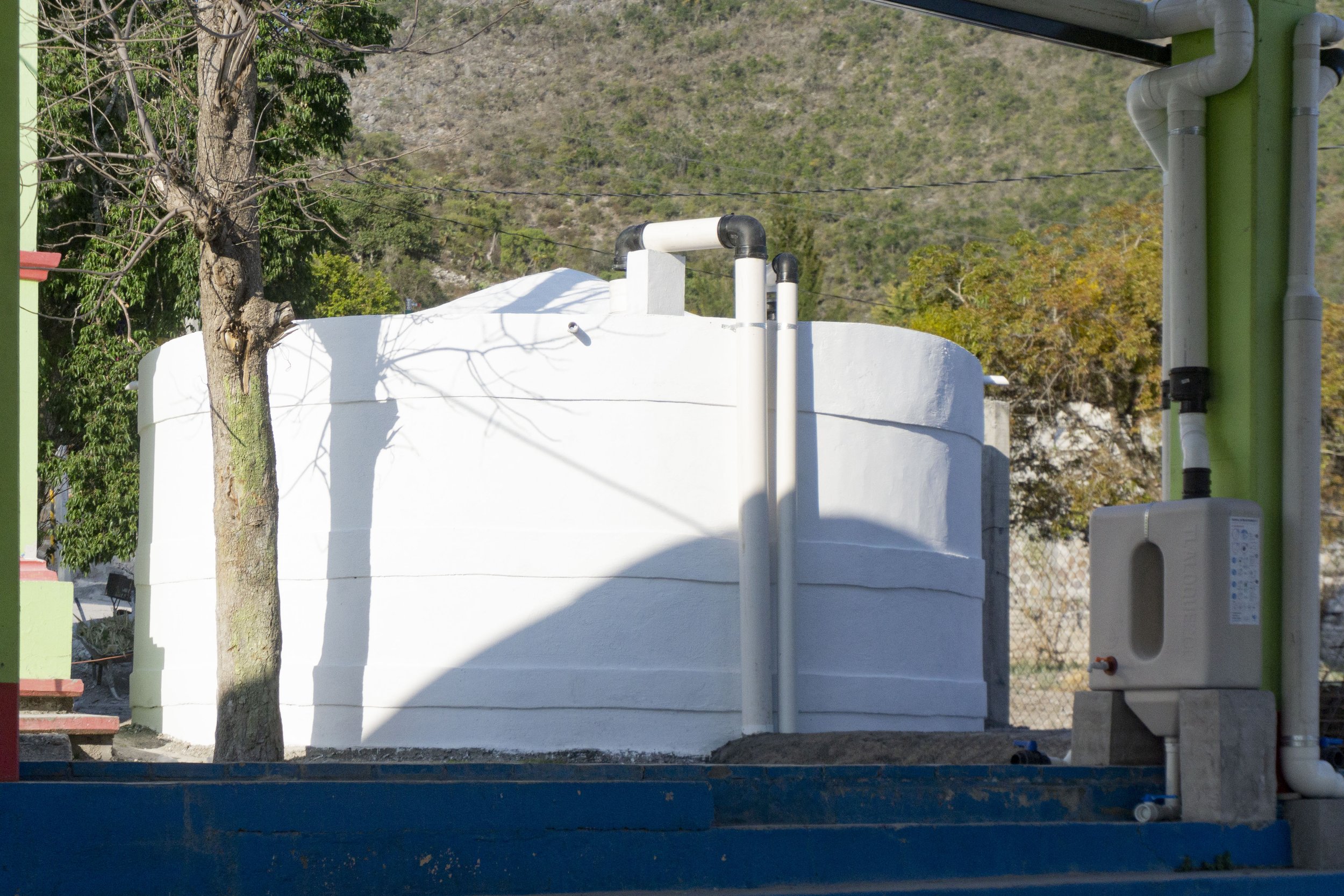
This article is a synthesis taken from the Municipal Rain-Water Harvesting System Project built at Santa María Ixcatlán funded by SACRED.
Water limits are pretty much like the limits of hospitality:
They mock borders but are able to recognize the horizon.
—Jean Robert
A Global Blindness
Centuries ago, cartographers used the mysterious labels terra incognita and mare incognito to obscure the edges of their maps in enigma. These "unknown lands" and "unknown seas" represented more than just geographical voids; they were the limits of human understanding, areas where the radar of exploration simply didn't reach. Whether it was the polar caps of the 15th century or the vast landmasses Chrisopher Columbus stumbled upon in 1492, these oversights were eventually corrected by science and exploration. However, a far more dangerous type of cartographic invisibility persists in the modern era: the often ignored water crises that hide in plain sight, under the radar of global politics and technological hubris.
While we might smile at the humble maps of the Renaissance, our modern worldview suffers from an equally profound misconception. We call our home "Earth," a name synonymous with the dirt beneath our feet, despite the reality that two-thirds of the surface is covered in water. This semantic disconnect mirrors a deeper social negligence. Just as past explorers left continents off their globes, modern global conversations often omit the vital "aquatories" or watersheds of marginalized regions. This is very palpable in the Xuani community of Santa María Ixcatlán, where the "unknown" isn't a precarity of means, but a systemic lack of visibility for their local water reality.
This invisibility is not accidental; it is structural. The neglected status of water resources isn't a neutral failure, it has been manufactured consensus of what’s important and the exclusion of the rest of narratives. Natural resources remain an unfathomable concern only to those whose power allows them to ignore the consequences of their own extraction. While the discourse is dominated by a specific language—funded by economies they control and rooted in worldviews they monopolize—marginalized communities, particularly in rural Latin America, are left to bear the consequences of this deliberate ignorance.
The Discrepancy of Experience
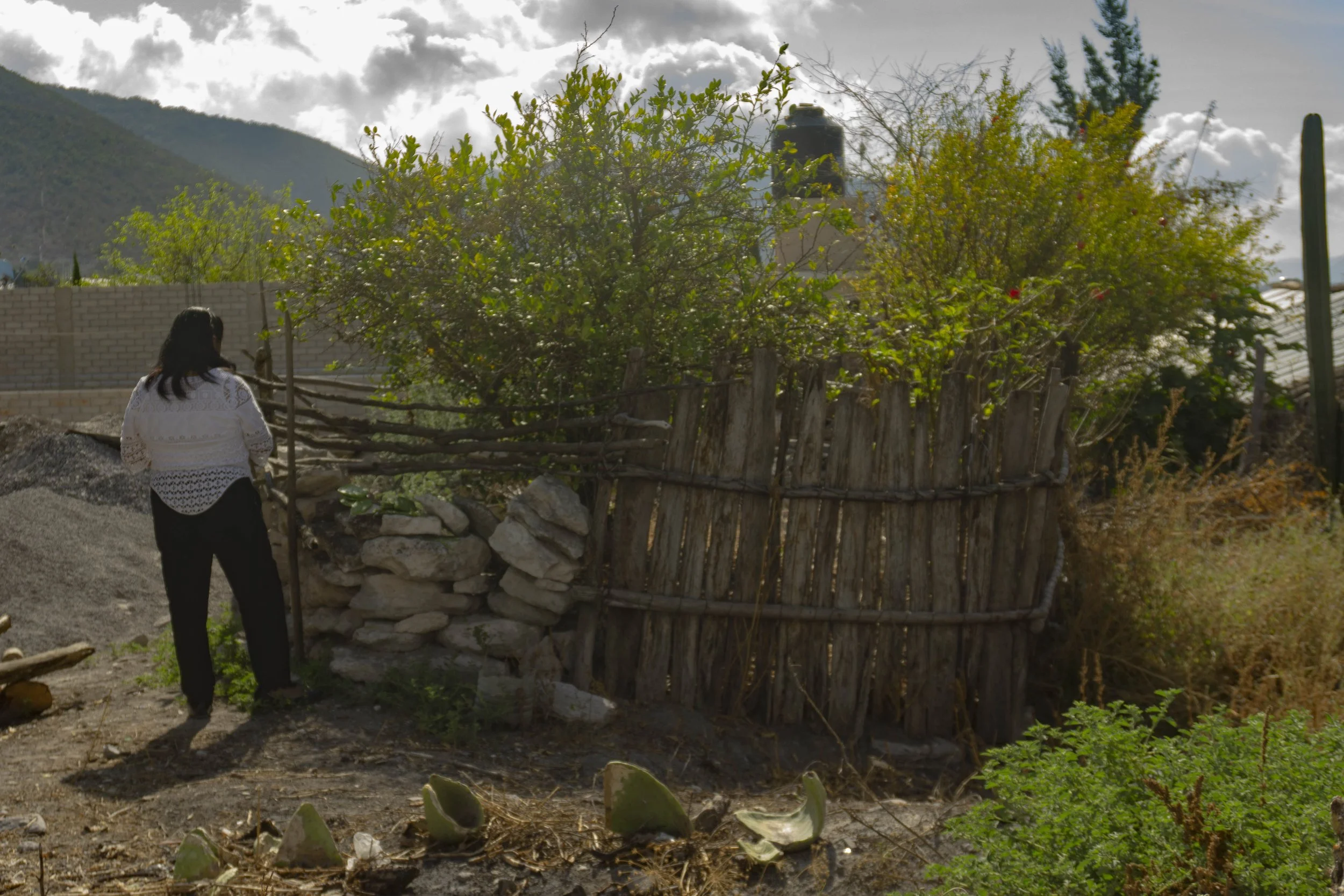
I first confronted this theoretical invisibility during a trip to Santa María Ixcatlán, Oaxaca. I arrived alongside French artists whose work focused on the aesthetics of "failed urbanization"—specifically, the wooden trestles and construction debris scattered across the landscape. While their artistic lens was sympathetic, it created a sharp, unintentional cognitive dissonance. What they perceived as "debris" were, in reality, community features: a bread oven constructed from local white stone; and, what they mistook for a rustic root cellar, was the vibrant heart of the town where Ixcatecos congregated to craft palm-leaf objects. They were looking at a map of "failure," while I was beginning to realize I was standing in a landscape of functional, but misunderstood resilience.
It is not just naive traveling, but an understanding constructed by social expectations. Dominant narratives tell us what polished, clean or ordered or finished should look like. By way of habit and inculturation we learn what’s good and what’s not and the ways to name it.
Language and Scarcity
Mexico has 68 ethnolinguistic groups. The Ixcatecos are among the most marginalized of them: there are only six remaining people who still speak the language of the ancestors who held these same historical lands. This linguistic decline is not an isolated phenomenon; it is inextricably intertwined with their socio-ecological decline. As their landscape erodes, elements and relations to be named are lost as well. The language of their ancestors fades, so too does the community’s resilience, specifically regarding the intensifying crisis of water scarcity which hinders agricultural production.
The Ixcatec legend of a prehistoric "Samson" who failed to divert the Río Xiquila into the village speaks to a deep historical struggle with hydrological management. People always had had troubles adapting to the land. But now the land is drying and topsoil is running off with water and wind, so the traditional milpa agriculture that has sustained them for centuries is even more demanding. As rainfall diminishes too, farming has increasingly become a super-human labor and unsustainable job, driving a cycle of migration and abandonment that threatens the very fabric of the community.
The more people leaving the town, the less people managing and naming their ecosystem. The less the ecosystem is cared for, the less resources it gives to the community, gradually becoming a self-reinforcing cycle of biocultural erosion.
The Watershed Paradigm
The problem is that the word "territory"—derived from terra, or earth—traps us in a flawed paradigm. It imposes fixed, imaginary borders on soil, ignoring the fluid reality of water, which defies property lines and flows beneath our demarcations. Through the watershed perspective, —an interconnected water catchment area—the absurdity of imposing state lines on a shared, flowing life source becomes undeniable.
Ixcatlán serves as a clear case study in this administrative fracture. Straddling the jurisdictional borders of the Reserva de la Biósfera Tehuacán-Cuicatlán, the state of Oaxaca, and the hydrological influence of Veracruz, the community is governed by external programs that rarely align with the local realities of the people that have managed that landscape for centuries. As anthropologist Arturo Warman poignantly observed: "Peasants were and still are at the margin of political decisions... they were just the human resource, the tool of a project of the industrialized society. Foreigners decided on their behalf for the sake of others."
Vernacular Memory
Despite this administrative erasure, the community’s wisdom remains inscribed in the landscape. Their vernacular architecture is not merely shelter; it is a repository of water management evolved over centuries. White limestone courtyards, the use of amole (a plant-based soap), and a closed-loop integration of livestock demonstrate a sophisticated resource circulation that modern infrastructure fails to replicate. Here, waste becomes humus and gray water sustains the soil. This is a different blueprint for architectural sustainability thriving without a single gram of cement.
Each home acts as a tiny localized watershed. The ridgelines of tile roofs channel water into specific courtyard sections or homemade water harvesting systems. This captured water serves household needs or small livestock. Manure from these animals flows directly into huertos de traspatio (backyard orchards), nourishing fruit trees like pomegranate and guava, or supporting small kitchen gardens.
In central patios, washing stations complete the cycle; gray water is diverted to gardens or phytoremediation beds planted with daffodils and heliconias, ensuring that every drop remains productive.
The Illusion of Modernity
However, this sustainable logic is under assault. The "underdevelopment" narrative—officially codified by Harry Truman in 1945—effectively rebranded traditional practices as obsolete. This "development" package brought plastic tanks and rigid plumbing to IxHowever, this sustainable logic is under threat. The "underdevelopment" narrative—officially given by Harry Truman in 1945—effectively rebranded traditional practices as obsolete. Science and technology were not neutral tools, but ways to control and diminish other epistemologies. Governments around the world encouraged the creation of living strategies, not only based in what was the most efficient, clean or adaptable solution, but rather what was the most economically scalable.
Nothing exemplifies this better than the flushing toilet. An eighteenth-century trend built to solve the problems and necessities of sixteenth-century England—namely, the hygiene crises of dense, early modern urban spaces. This was later industrialized into a universal standard of “civilization.” By prioritizing infrastructure third-party industrial manufacturing, centralized plumbing, and the constant wasting of clean water, the modern flush toilet forces an ecologically disruptive system onto diverse global landscapes, completely erasing highly adaptable, localized, and circular waste-management traditions.
The "development" package brought plastic tanks and rigid plumbing to Ixcatlán, replacing the community's localized, self-sufficient water management with an outsourced dependence on government and industrial infrastructure. Through these practices, consumption replaced productive labor. The community was no longer managing their own water; they were now waiting for it to be piped in from elsewhere.
This shift transformed water from a shared, active relationship with the local environment into a passive commodity delivered by a centralized state. By importing standardized engineering designed for distant, wealthy cities, the project ignored Ixcatlán's specific climate, seasonal rainfall, and long-standing ancestral knowledge. This version of progress has not been a solution, rather top-down dependency instead of self-reliance.
Conclusion: Reading the Landscape
In a centralized world, Ixcatlán suffers the recurring failures of the power capitals. We are trapped in a cycle of "bringing in more water, getting rid of more water"—a flawed technocratic and patriarchal "bigger is better" logic that has drained resources even in isolated areas within the mountains of Oaxaca. Mexico City stands as the ultimate monument to this philosophy. For centuries, the capital has attempted to resolve its hydrological crisis by treating water as a mere utility—bringing it in through gargantuan engineering feats and aggressively discharging it. This model of hyper-centralized control only exacerbates the scarcity it purports to solve, siphoning life from distant regions to fuel an insatiable, concrete expansion.
Ironically, hidden within this city's gigantic water system lies the Cárcamo de Dolores. Once a crucial water distribution center, it remains a space where the mythopoetic presence of water persists. Through Diego Rivera’s murals, water is depicted not merely as a commodity, but as a sacred, life-giving force. A powerful reminder of the worldviews that modern engineering has sought to bury. The Cárcamo stands as a testament to what we have forgotten: that water demands respect, cultural integration, and contemplation, rather than just pipes and concrete.
In ixcatlán, the legend of the ahuehuete trees—the guardians of the riverbanks—points toward a truth deeper than science alone: water is the genesis of all life, both physical and mythopoetic. If we are to find a path forward, we must stop looking for solutions in the "outside" centers of power. Like the Xuani, we must learn to read the history written in our own landscapes, charting a new cartography where memory, language, and water flow together once more.