

Anthropology of
Agave and Mezcal
6-Week Online Course
April 27, 2026
Agave and mezcal as living biocultural worlds — where land, bodies, knowledge, and power meet.
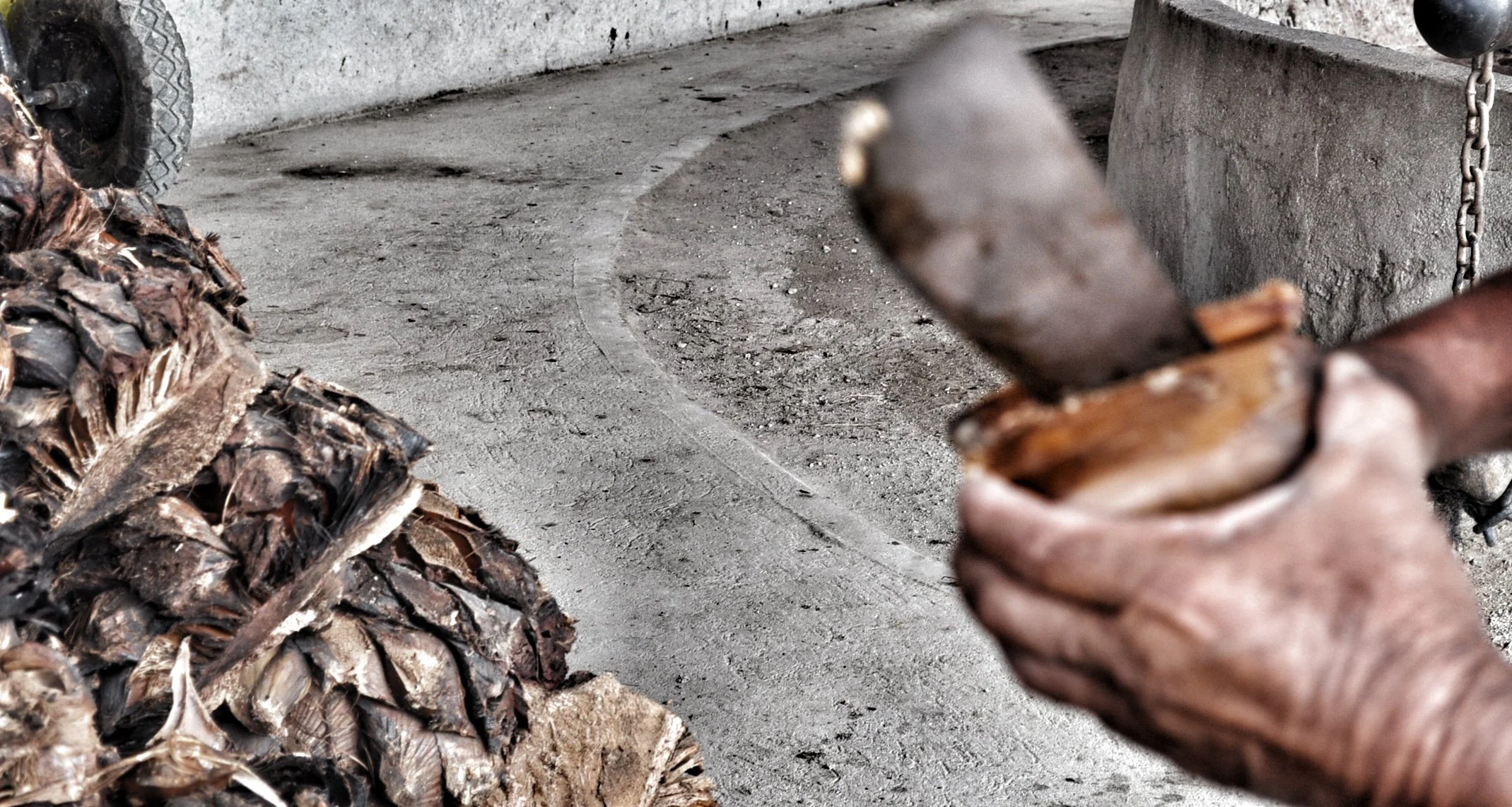
Let’s bring social studies to
food and beverage!
This course brings anthropological depth to the world of agave and mezcal, inviting participants to look beyond production techniques and tasting notes, and into the social, ecological, and political processes that shape them.
Drawing from food anthropology and agroecology, we explore how agave management and mezcal practices are woven through narratives, bodies, institutions, markets, territories, and ecosystems. Mezcal is approached not only as a beverage, but as a living social process embedded in everyday life.
Mezcal, as food and culture, sits at the crossroads of some of the most pressing issues of our time: social inequalities, land use change, migration, health, urbanization, rural ways of life, and the future of traditional knowledge.
Through ethnographic perspectives and critical discussion, the course offers tools to better understand the worlds that produce mezcal — and the worlds mezcal, in turn, helps to produce.
What you’ll learn
Understand mezcal as a biocultural system, shaped by land, labor, bodies, rituals, and political economies.
Identify how narratives, markets, and institutions transform food and drink, and how communities respond to those forces.
Strategies to recognize hegemonic narratives and methods to reframe systems of values.
Develop a critical lens to engage food and beverage beyond tasting, grounding appreciation in social, ecological, and ethical context.
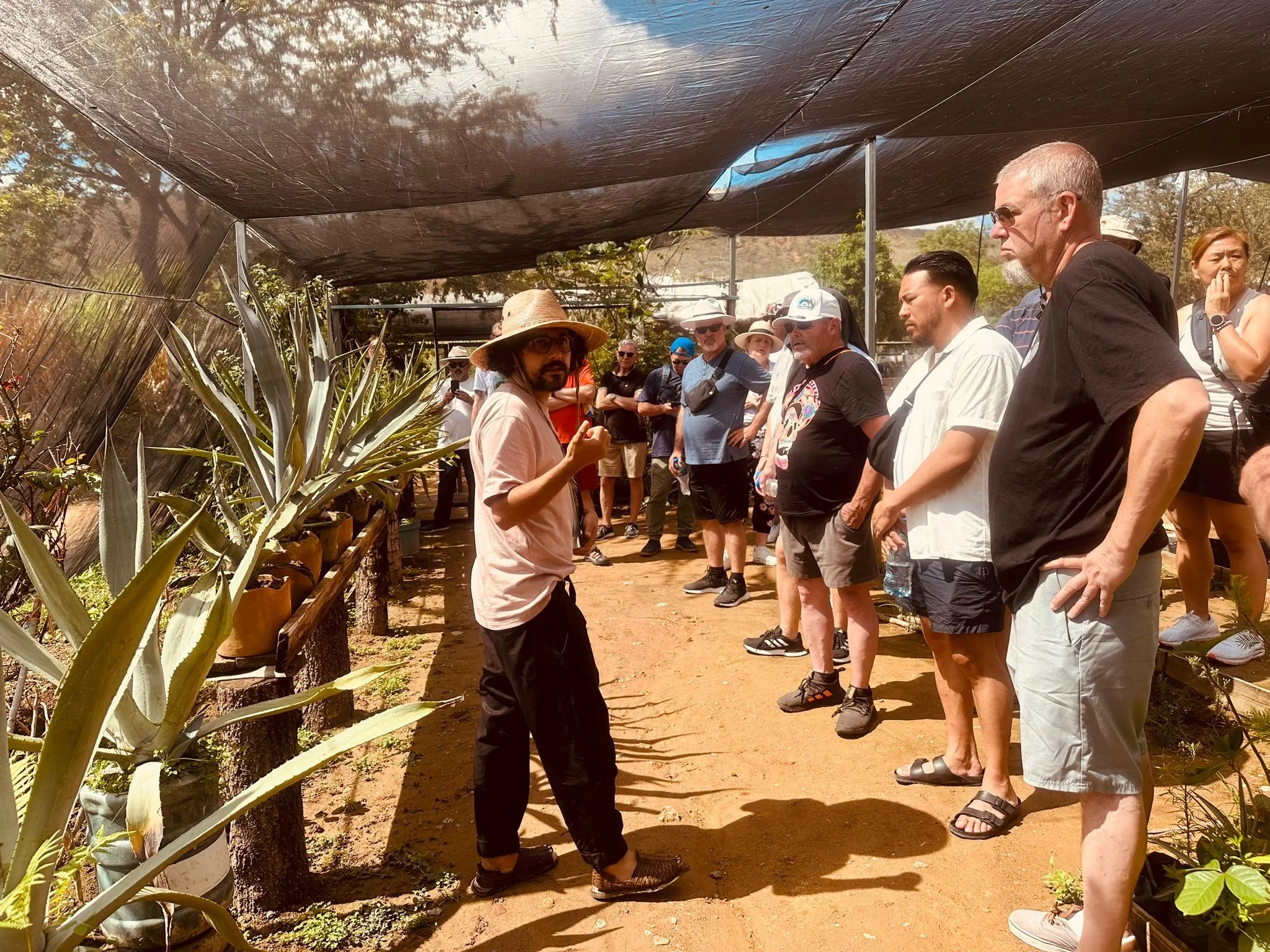
Who is it for?
This workshop is for people who work with food, territory, culture, or education and want to engage with mezcal beyond technical, commercial, or folkloric views.
It is especially relevant for cooks, researchers, students, educators, community organizers, agriculturists, and anyone seeking critical and shared perspectives on food systems.
Syllabus
-
Brief history of anthropology
About ethnography
Principles of anthropology
Anthropology or Intercultural studies
Food studies
Understanding agave and mezcal throuhg a cultural perspective
-
Cosmovision, and creation of meanings
Psychosociology of food
Cases of study
Transmission of knowledge
Cultural reproduction and resistancen text goes here
-
About the human body, the senses and taste
Historic taste
Construction of flavor and identity
Case studies
-
Agave biodiversity
TEK: Traditional Ecological Knowledge and the Agave
Local classifications of agave
Industrialization and capitalism concerning agave and mezcal
TEK and restoration
-
Traditional societies and agave peasants
Gender in mezcal
Geographical indications
Market systems and logistics
-
Intercultural practices for dialogue
Translocal solidarities
Representing with dignity
-
La memoria biocultural, Víctor Toledo y Narciso Barrera
Towards a Psychosociology of Food, Roland Barthes
Comida, cultura y modernidad en México. Perspectivas antropológicas e históricas, Catherine Good y Laura Elena Corona
El maguey y el pulque en los códices mexicanos, Oswaldo Goncalves de Lima
Etnoecología ixcateca, Selene Rangel
Distinction, Pierre Bourdieu
Hacia una reflexión decolonial de la alimentación en el occidente de México, Yanga Villagómez, Claudio Rocío Magaña
Cuerpo, cosmos y medio ambiente de Pierre Beaucage
Taste of place, Amy Trubek
La filosofía Náhuatl estudiada desde sus fuentes de León Portilla
Indigenous Storywork: educating the heart, mind, body and spirit, Jo-Ann Archibald
El retorno a la naturaleza: apuntes sobre cosmovisión Amazónica desde los Quechua, Grimaldo Rengifo Vázquez
Land as Pedagogy de Leanne Betasamosake Simpson
En tiempos de muerte: cuerpos, pedagogías resistencias de Lorena Cabna
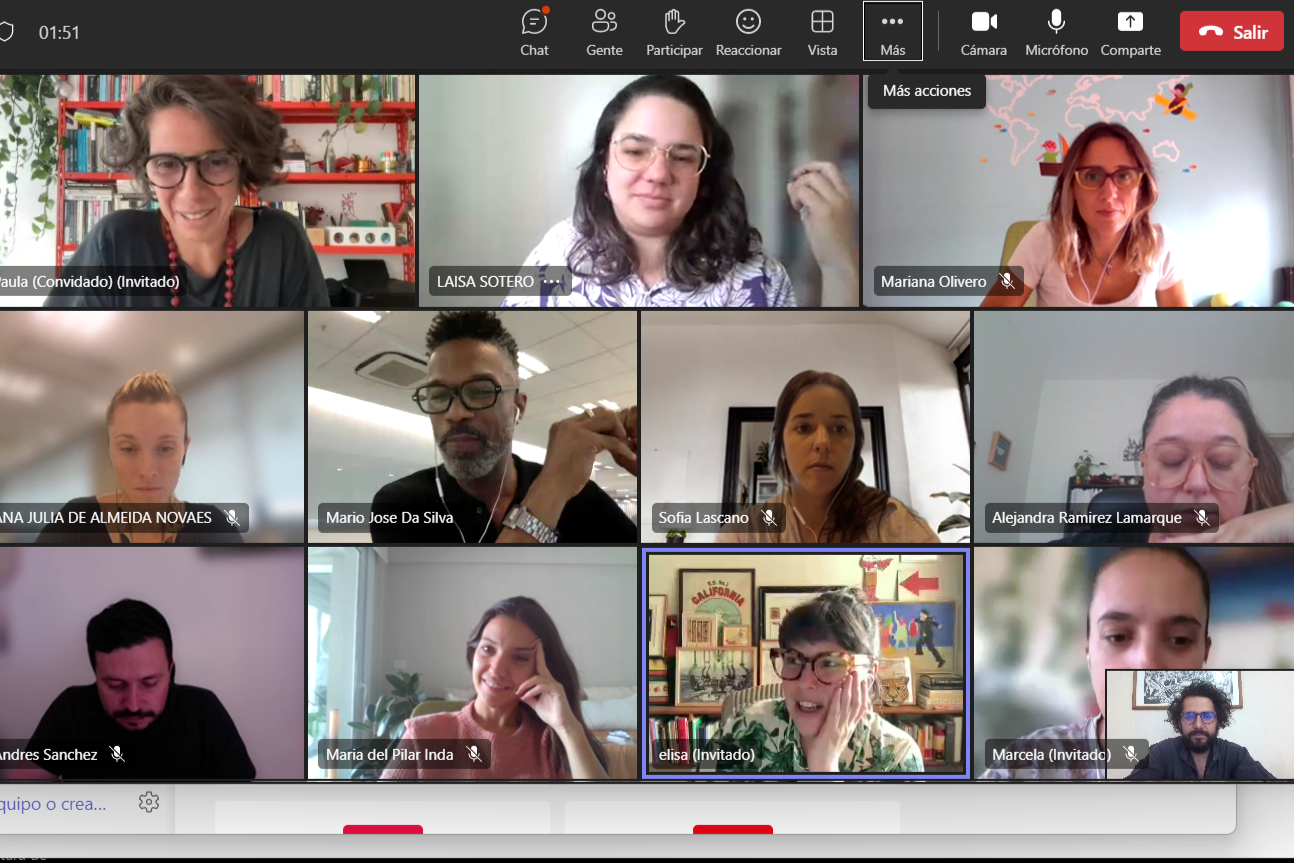
FORMAT AND AVAILABILITY
Date: Starting April 27, 2026. Every Monday.
Time: 19:00 hrs. (UTC-6)
DURATION: 6 sessions of 2.5 hrs. Each Monday.
FORMAT: Online sessions via Google Meets. Every session will be recorded for future anachronic review.
LANGUAGE: English
PRICE: 160 USD per person.
Ask about payment options.
Ask about scholarships. Send an email so we can adapt to your situation. We will be happy to reach an agreement.
Optional!
〰️
Optional! 〰️
Extended Certificate Track!
Transform your participation into documented learning time.
Same live sessions + structured independent work + final synthesis
Total hours: 40
Price: $280 USD
Ask about payment options.
Ask about scholarships. Send an email so we can adapt to your situation. We will be happy to reach an agreement
Peer to peer discussions
Listening and attention excercises
Deep dive into the readings
Document reflections
Final project
-
The Extended Certificate Track is an optional pathway for participants who wish to deepen their engagement beyond the live sessions.
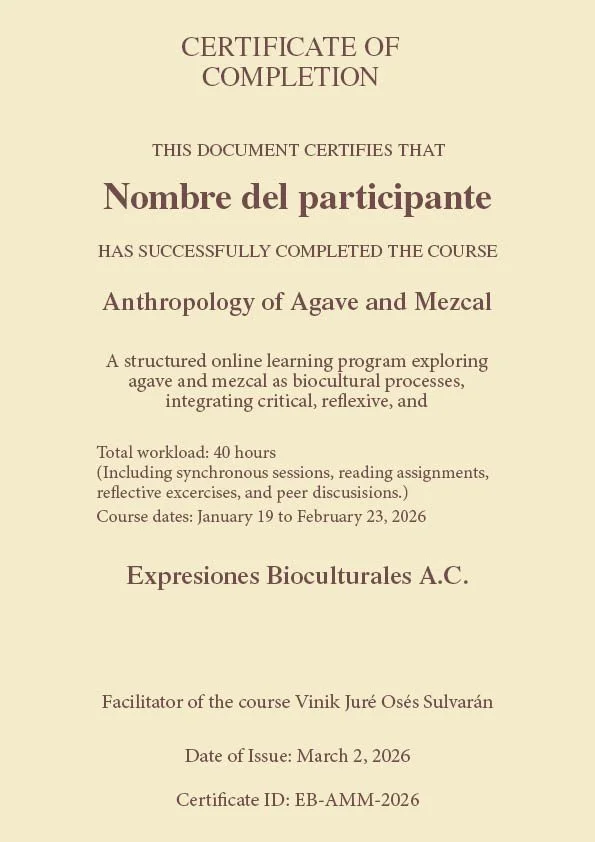
It includes guided readings, reflective exercises, and a final integrative assignment. Participants who complete this pathway receive a Certificate of Participation (40 hours) issued by Expresiones Bioculturales.
You can decide to join this track during or after the course begins.
“This is not an academic degree, but a documented learning process.”
Enroll now!
Send us an e-mail to confirm your space and receive following instructions.
Or ask more for more details.

“Born from a field-based ethnographic project in southern Mexico, this workshop applies a critical and reciprocal anthropology to develop a transformative learning community.”
Would you like to bring this workshop to your space or group?
Write to us to arrange an edition tailored to your needs.